
by Dr. Sarah Boettner
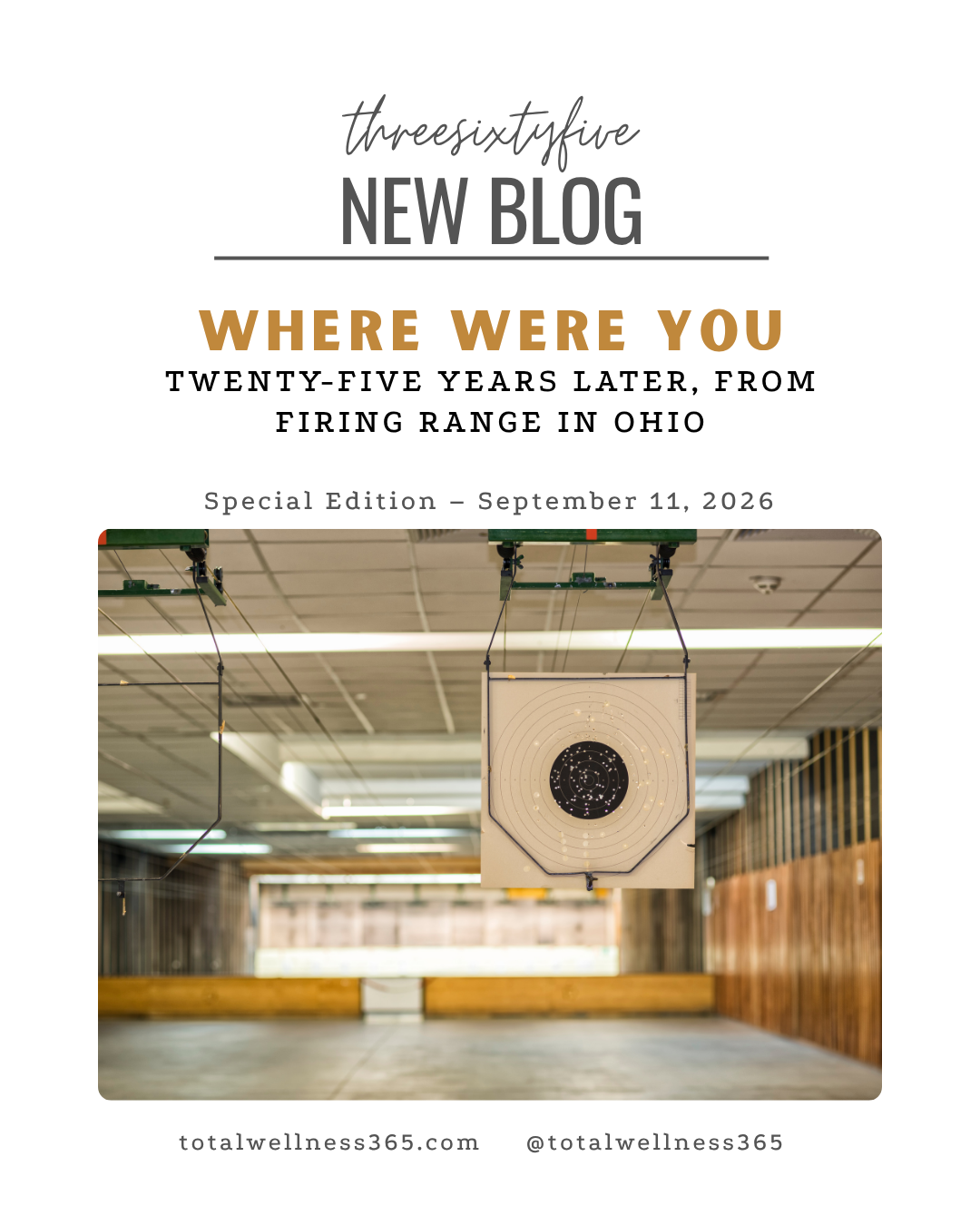
September 11, 2001, I was on the firing range at the Ohio State Police Academy getting firearms certified. Our instructor came in from break with the news playing on his phone. Our small group stood in stunned silence, and then somebody made a joke, gallows humor being fitting since we are law enforcement officers and that is how it goes.
After many delays we were sent home. The drive from Columbus to Dayton was eerily still. No traffic. No highway patrol running speed. My route took me past Wright-Patterson, where the quiet broke open for the low growl of a caravan of military humvees moving down the interstate, and then closed back over the road behind them.
Everyone has one, and the having of it is what makes the group
Returning home was quiet in the same way. I was living alone. I sat in the silence, numbed to the horror, the television on mute. The only sound in the apartment coming from my cat, who had settled onto my lap and was purring while my hand moved over her absently. The cell towers stayed clogged for hours, so there was no reaching anyone. It was a version of loneliness I have not experienced before or since.
Where were you on that fateful morning. I heard that question growing up, always from the older generations and always about the death of JFK. Then decades later I heard it again about Challenger. It gets asked because the answer is assumed to exist. Everyone has one, and the having of it is what makes the group.
There is now a generation of first responders who don't. They were in elementary school, or they weren't born yet. They have no morning to describe, no drive home, and nothing to say when the question comes around, though they carry the day regardless.
We categorize generational trauma narrowly, as something transmitted through family of origin, through lineage and blood. The breadth of this one says otherwise. It moved through chosen family. Brothers and sisters in uniform. Wives, husbands, and children of first responders. Neighbors, visitors, friends, strangers. The people who were in New York, in Washington, D.C., in Pennsylvania, and the people who were thousands of miles out watching it happen on a television in a break room. That is the bloodline it traveled.
The young ones inherited all of it. They wear a uniform that has meant something different since 2001, receiving the same gratitude and the same sorrow that was directed at the ones who were standing there, aimed now at people who experienced the day secondhand or not at all. They hold the community's grief and the nation's grief without any of their own to set it against.
Secondhand does not mean lighter. It means carrying it without the morning that explains it.
Twenty-five years on, they will be asked where they were. They will say they were four years old, or that they weren't here yet, and then they will go back out and do the job the day built.