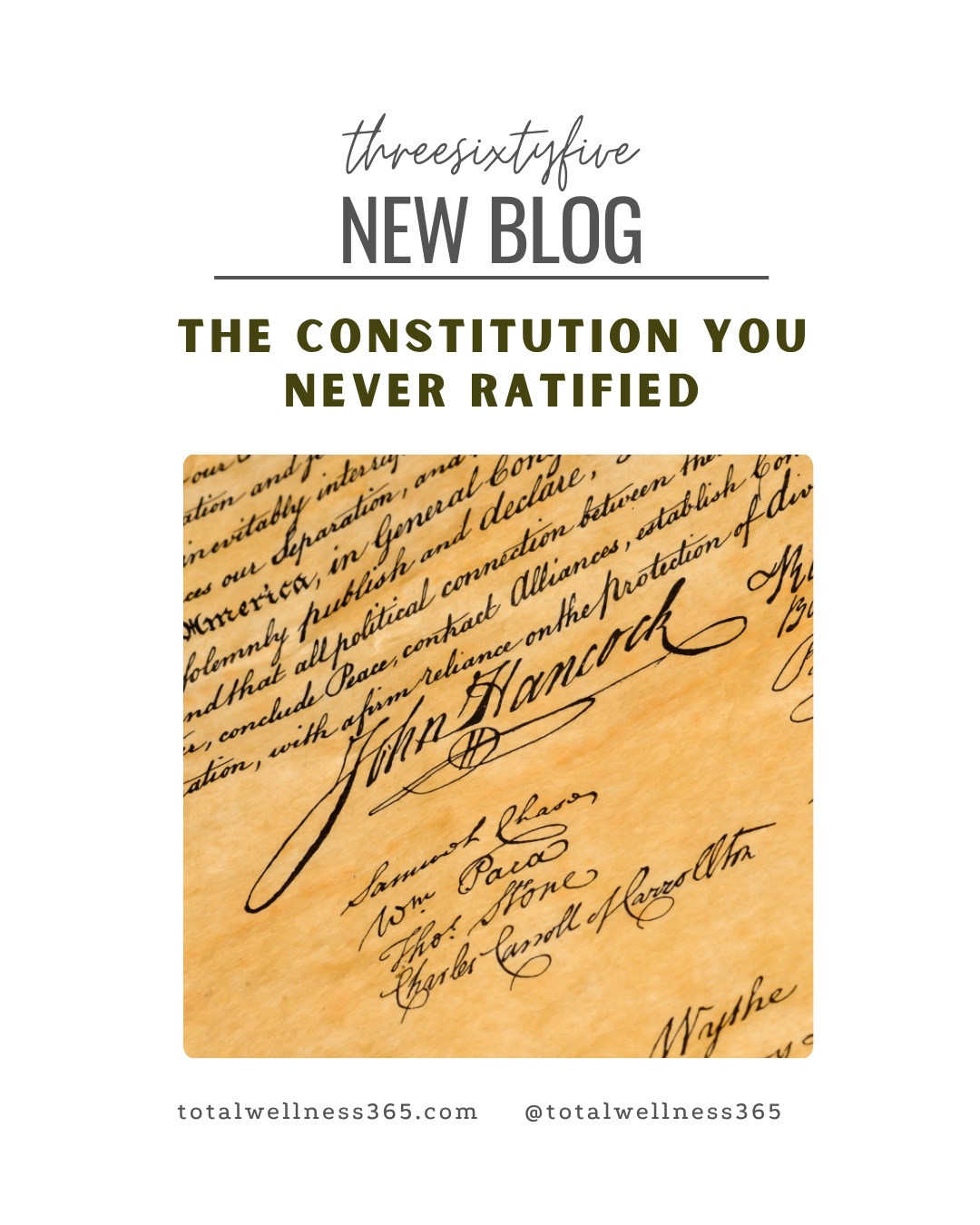
Somewhere there's a document governing your decisions that you never read, much less signed. You didn't write it. You inherited it — from a parent's fear, a culture's expectations, a religion's rules, an early experience that taught you what was safe and what wasn't. It told you who to be, what to want, what was allowed and what would cost you too much to claim. You've been governed by it ever since.
WHAT YOU CALL YOUR VALUES
Ask someone what they believe and they'll usually answer fast. Family matters. Hard work pays off. Don't be selfish. Stay humble. These come out smooth because they've never had to be defended. They were never chosen. They were absorbed, the way a child absorbs the temperature of a room without knowing there was ever another option.
That doesn't make them wrong. Some of what you inherited is worth keeping — tested by generations, proven useful, genuinely yours even though you didn't originate it. But inheritance and ownership are not the same thing, and most people have never separated the two long enough to know which is which. The test isn't whether a value sounds good. The test is whether you'd choose it again, knowingly, if no one had ever told you to.
THE COST OF NOT LOOKING
Examining this is not safe, and there's a reason most people avoid it. As long as the rules stay unexamined, you're not responsible for them. You can blame the family, the culture, the circumstances. Once you look directly at what's governing you and decide to keep it or replace it, the responsibility becomes yours. There's no more inheritance to point to.
That's the actual cost. Not the discomfort of self-reflection — people tolerate that fine when it doesn't ask anything of them. The cost is ownership. Once you know what you're operating by, you can't claim ignorance of why you keep making the same choice, protecting the same fear, sacrificing the same thing for approval that was never going to come from where you keep looking for it.
RECREATION, NOT RENOVATION
This isn't about discovering your "true self" underneath the inherited rules, waiting there fully formed. There isn't one. The self you'd find under there is just an earlier draft, shaped by whatever was available at the time. Going back to it isn't the goal, because it was never finished and it was never entirely yours either.
What's available instead is harder: deciding, deliberately, what you're going to value going forward, and building the discipline to live by it even when the old rules are louder and more familiar. That's not renovation, it's recreation — keeping what holds up, discarding what doesn't, and owning the difference. It will cost you something. Claiming a value you actually believe, rather than one you were handed, often means disappointing the people who gave it to you. It means giving up the comfort of "that's just how I was raised" as an explanation for choices you're still making in the present tense.
THE QUESTION THIS LEAVES
If you stripped away what you were told to believe — by family, by culture, by every voice that had authority over you before you had any of your own — what would actually be left standing? Not what would feel good to claim. What would survive your own scrutiny if you looked at it without the protection of "this is just who I am."
Most people have never asked that question seriously, because the answer requires them to either defend something they've never examined, or admit they're still living by someone else's terms. Most people never find out.
Be Well.