
We’re told time and again that prioritizing ourselves first allows us to be better for others. Here’s why it should be the other way around.
Here we are, 5 days into 2023…how’s it going? Did you set resolutions, goals, or intentions? Are you still going to the gym or are you craving cookies yet; they are hard to resist! If you are still working on finalizing your goals for 2023 (you’re not alone in that!) let me encourage you to incorporate the 4 pillars of wellness (physical health - sex + relationships - spirituality - career + education). Here are some prompts to consider.
Improve flexibility.
Get tested for food sensitivities that cause inflammation.
Consider taking supplements to support physical and mental health (e.g. omega’s, magnesium, turmeric).
Replace worn out fitness equipment (e.g. worn shoes, tired exercise bands, the rotting bike tires).
Establish or deepen communication with partner(s) about what turns you on and off sexually.
Review the values of you as individuals and as partners to see how the align.
Experiment with some kink play (e.g. light bondage, toys, role playing).
Create open and ongoing dialogue about non-sexual intimacy satisfaction in all your relationships.
Restore, create, or amend boundaries.
Build routines that feed your soul.
Volunteer, meditate, pray, journal.
Get outside. Move, get sunshine.
Call elders that you respect and learn from them.
Build intentionality in performance goals, whether they are measured by your employer or you.
Read some books for pleasure.
Learn a new skill or hobby, take a class at the local community college or education center. (Urban gardening anyone?).
Reflect on your career goals from 5th grade and where you are now. How did you get there? What’s different? What lessons can you pass onto others?
I’ve been known to use cars as analogies when working with clients. Here’s another one. When we keep looking to the past we are looking in the rearview mirror. It’s small, it can be deceiving, and offers a limited view of what’s now behind us. But when we look to the future, through the windshield, we have a greater view of what’s ahead. We can maneuver our way through roadblocks, avoid construction zones, and enjoy the scenery along the way.
The same perspective applies to our wellness. When we keep looking backwards we may miss what’s in front of us. I encourage you continue looking ahead as you embrace your total wellness in 2023!
Sarah B.
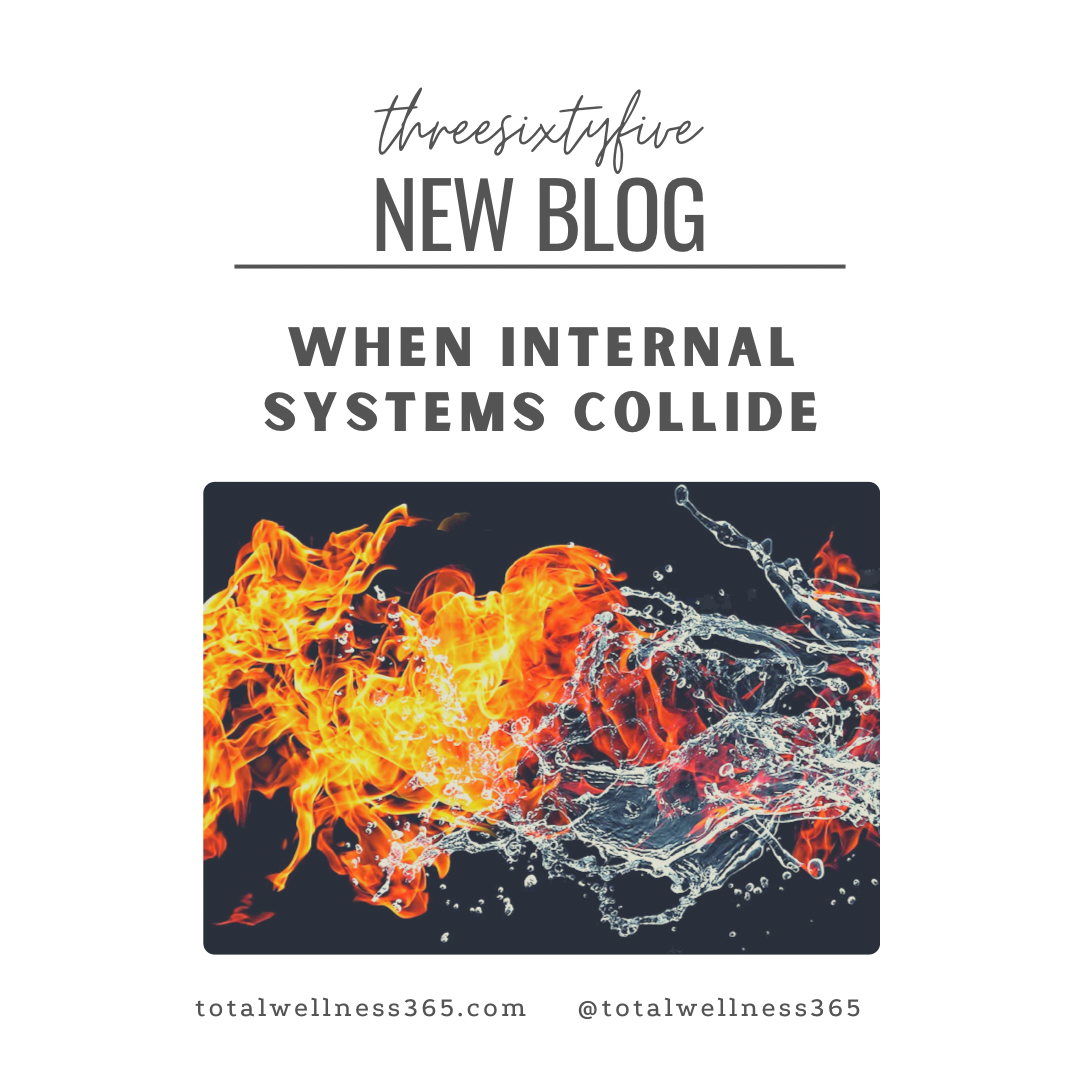
Every one has the same basic outline of the autonomic nervous system (ANS), with sympathetic and parasympathetic, that helps us respond to danger or threats; unfortunately the ANS can be overstimulated from traumatic events or experiences, creating a lasting pattern of over responding to innocuous situations. Ever hear of the book The Body Keeps the Score by Bessel van der Kolk? (if you haven’t, i highly recommend reading it!) There are other researchers and books that have studied the impact of lived experiences on our ANS responses such as Stephen Porges with Polyvagal Theory, and Francine Shapiro with EMDR.
I’m not an expert in all those models, nor am I a neuroscientist. But I do know is this; without retraining our responses, we can stay in a state of over activation causing a hurtful impact to our mental, emotional, and physical wellness.
THe ANS is divided into two sections; the sympathetic and parasympathetic. The sympathetic system controls our heart rate, breathing, muscle activation. This system is triggered when there is a imminent danger or stressful event. This is that fight or flight response. People often describe feeling their heart pounding, maybe get a little sweaty, their breathing becomes faster and more shallow. People may experience some fidgetiness or restlessness. All these is the body’s way of preparing for action to respond to the danger or stress.
The parasympathetic system is linked to a state or stillness, often referred to freeze or called rest and digest. If the sympathetic system is the upper torso (heart and lungs) then the parasympathetic system is the lower torso (diaphragm and digestion). People describe feelings of heaviness, low energy, stiffness or inability to move quickly. These two systems work hand in hand to help us respond to danger or stress.
In order to find some relief from over activation of the ANS, one must become familiar with their unique cues and triggering factors. Working with a therapist, the individual will uncover some of the past and/or current experiences and triggering moments that elicit an ANS response that may be unnecessary or exaggerated. This exercise can take weeks to uncover and requires patience from the client and the therapist. There are many ways to go about uncovering these cues and triggers; traditional talk therapy, hypnosis, brain scans to name a few.
The goal is to find a way to rewire the brain and ANS to these moments, allowing the connection between the body and the mind to be reconfigured. Not quite rewriting the history, but rewiring or retraining the body to respond in a way that is more aligned with core experiences of safety and connectedness. Techniques such as polyvagal theory, EMDR, brain-spotting, are highly successful in providing client with new ways to respond to past experience and future life events.
Be Well.