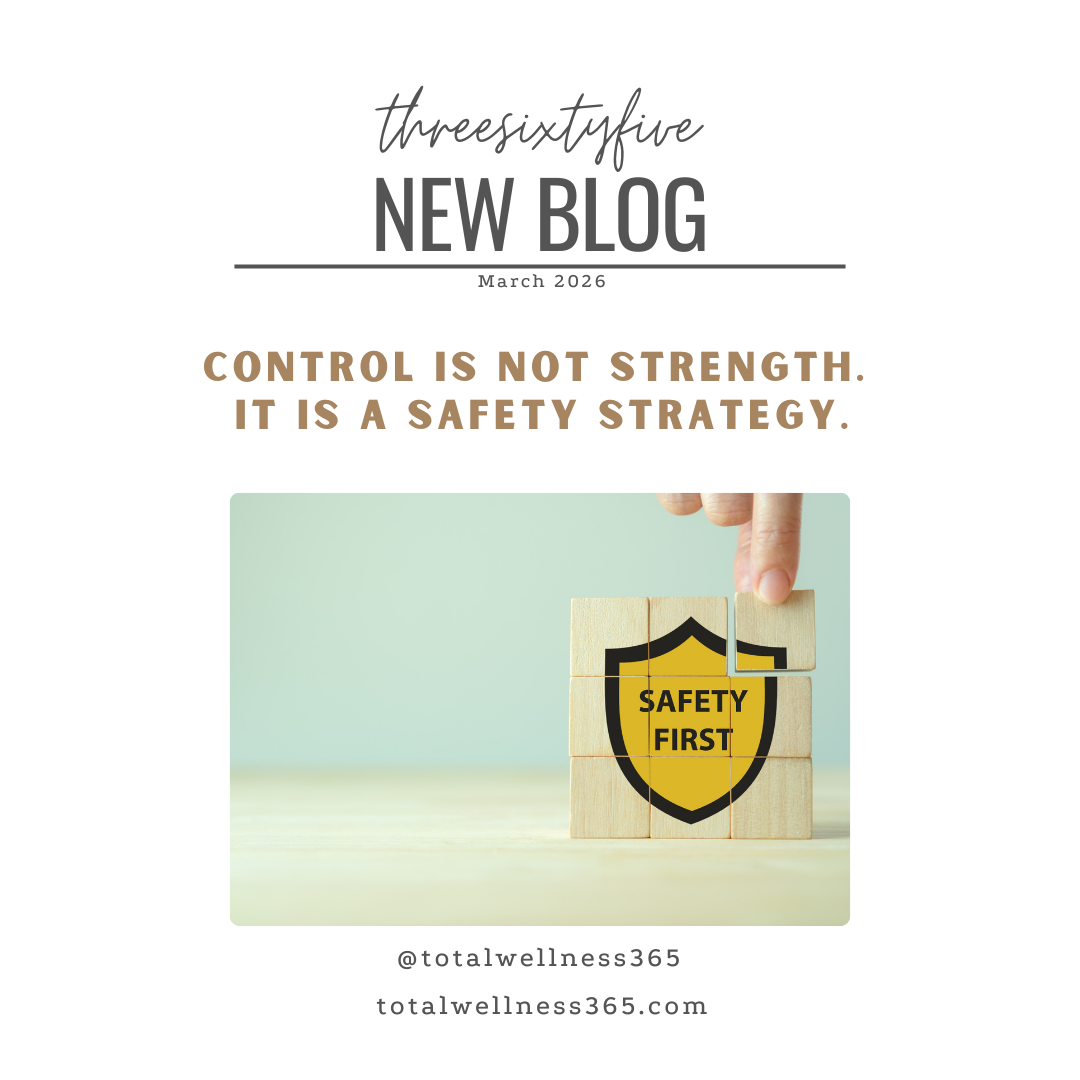
Control is often praised as maturity. Structure. Planning. Discipline. Precision.
But biologically, control is a threat-reduction strategy. When uncertainty once meant danger, the adult nervous system compensates by increasing predictability.
More structure.
More foresight.
More contingency planning.
More output.
It looks like leadership.
It can also be unresolved alarm.
The Neurobiology of Control
The human nervous system is built to detect threat faster than safety. If early experiences paired unpredictability with pain — emotional or physical — your system learned to scan, anticipate, and preempt.
Control becomes a way to lower sympathetic activation.
If I can predict it, I can survive it.
If I can organize it, I can reduce it.
If I can excel, I can secure my position.
Again — adaptive.
But when adaptation becomes identity, you lose range. You no longer choose discipline. You require it.
You no longer use control. You depend on it.
Achievement as Attachment Insurance
For some people, excellence was not about ambition. It was about belonging. If I am exceptional, I am valued. If I am valued, I am less likely to be discarded. If I am less likely to be discarded, I am safe.
This wiring does not disappear just because you are now competent. It simply refines itself. You call it drive.
Your nervous system calls it threat management. Which is why rest feels uneasy. Which is why stillness feels unproductive.
Which is why “ordinary” feels intolerable. Ordinary does not feel neutral. It feels like invisibility.
Grandiosity and Shame Share a Nervous System
The push to be remarkable often lives beside a fear of being nothing. You oscillate between: “I need to excel.” and “If I fail, I am irrelevant.”
That is not confidence. That is a fragile equilibrium maintained by output.
Control stabilizes the oscillation temporarily. But the cost is chronic tension. You do not relax. You collapse. You do not rest. You shut down. That is not strength. That is a nervous system that has not learned safety outside of performance.
Discipline vs Self-Trust
Discipline enforces behavior. Self-trust tolerates uncertainty. Discipline says: Follow the structure so nothing falls apart.
Self-trust says: If something shifts, I can respond without disintegrating.
Control is rigid because it assumes catastrophe. Self-trust is flexible because it assumes internal capacity. Most high performers confuse the two. They admire their discipline. They have never tested their self-trust.
The Confrontation
If you stopped controlling your environment as tightly… what would surface?
Grief?
Fear?
Anger?
Inadequacy?
Or simply exhaustion from maintaining the image?
The fear is that without control, there will be chaos. More often, there is grief. Grief for the parts of you that were organized around being impressive instead of being known. Grief for the years spent confusing vigilance for strength. Control is not weakness. But neither is it proof of maturity.
Strength is range.
The ability to tighten when needed — and soften when safe. If you cannot soften, you are not strong.
You are armored. And armor is useful. Until it isn’t.